.svg)

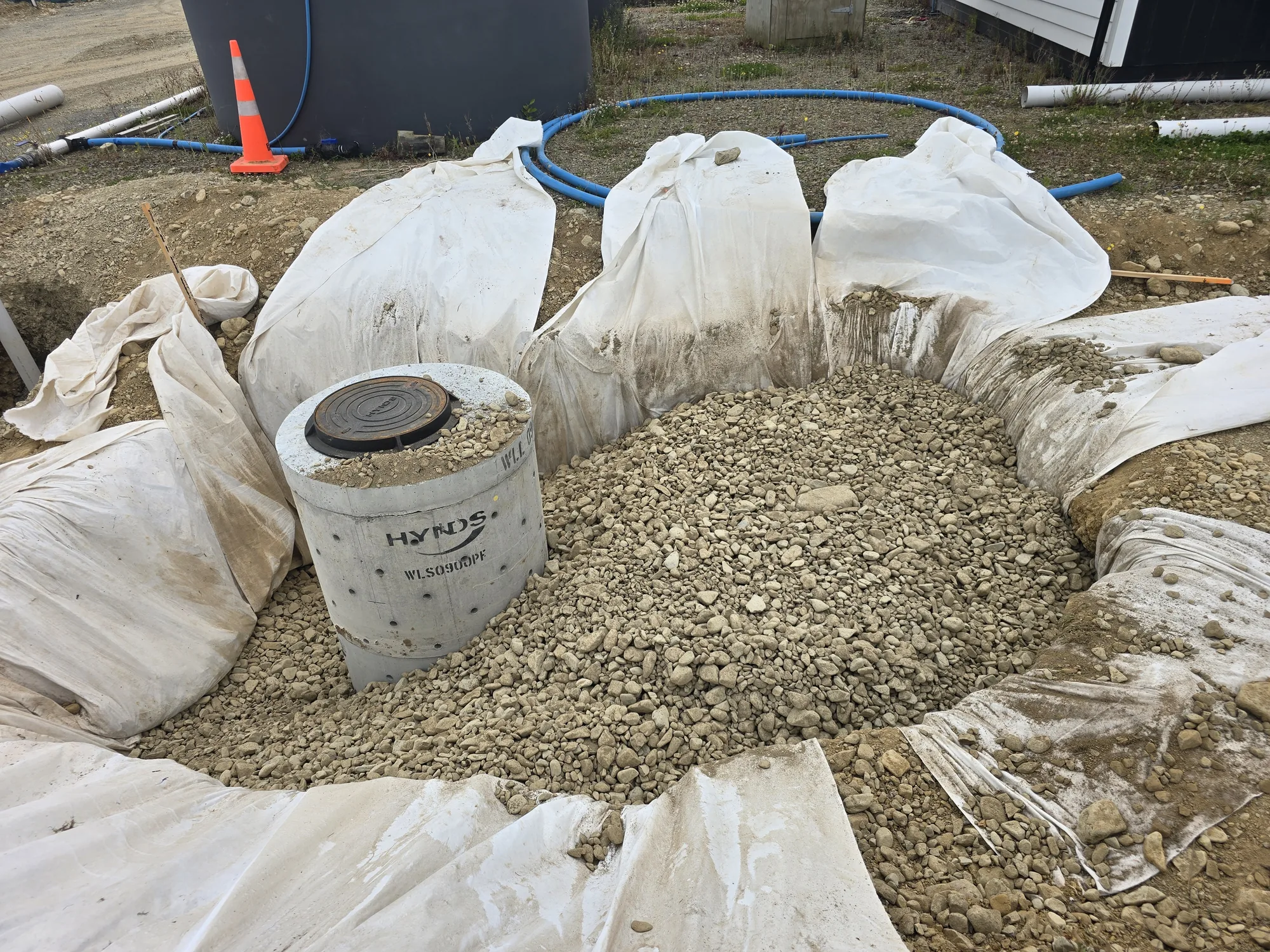

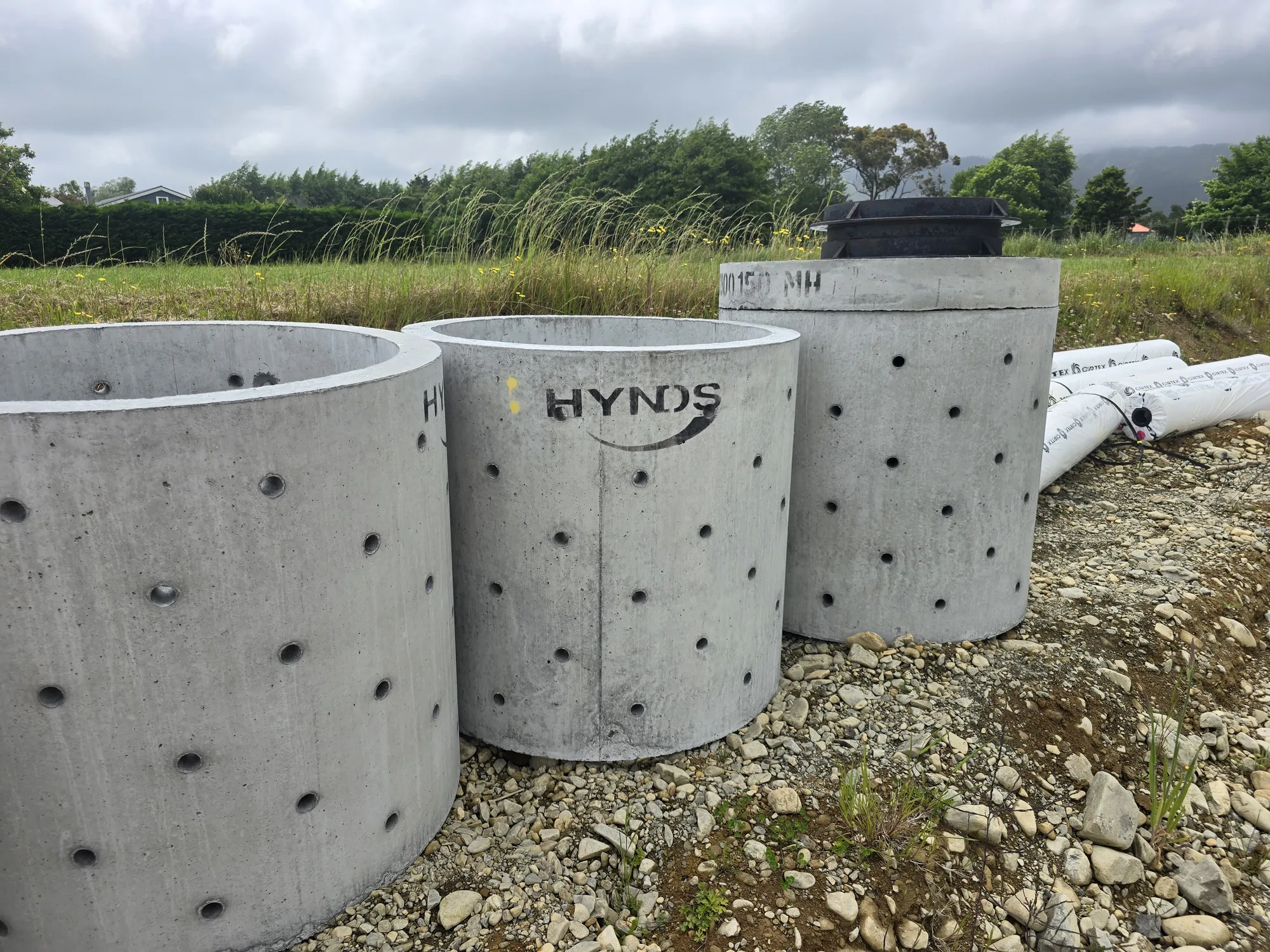
Where council stormwater networks are unavailable or connection is impractical, on-site soakage - via soak pits or soakage trenches - provides an alternative disposal pathway for stormwater runoff. Soak-pit design involves testing the site's infiltration capacity, determining appropriate system dimensions, and preparing design documentation for building or resource consent.
Not all ground soaks well. Clay soils, high groundwater tables, and shallow bedrock all limit infiltration - and an undersized soak pit that backs up during a storm can cause flooding of the building platform or neighbouring properties. Councils require evidence-based design: soakage testing results, calculations, and drawings that demonstrate the system will perform under the design storm conditions. A system sized on assumptions, rather than site data, is a liability waiting to materialise.
We conduct or coordinate falling-head soakage tests at representative locations on site, analyse results to determine design infiltration rates, and size the soakage system to meet design storm requirements - typically the 10% AEP 24-hour event. We prepare design drawings and specifications for council submission and, where soakage capacity is marginal, advise on alternative or supplementary disposal options. Our designs account for the site's seasonal groundwater conditions, not just the dry-weather infiltration rate - because it is the winter performance that determines whether the system works when it matters.