
.svg)

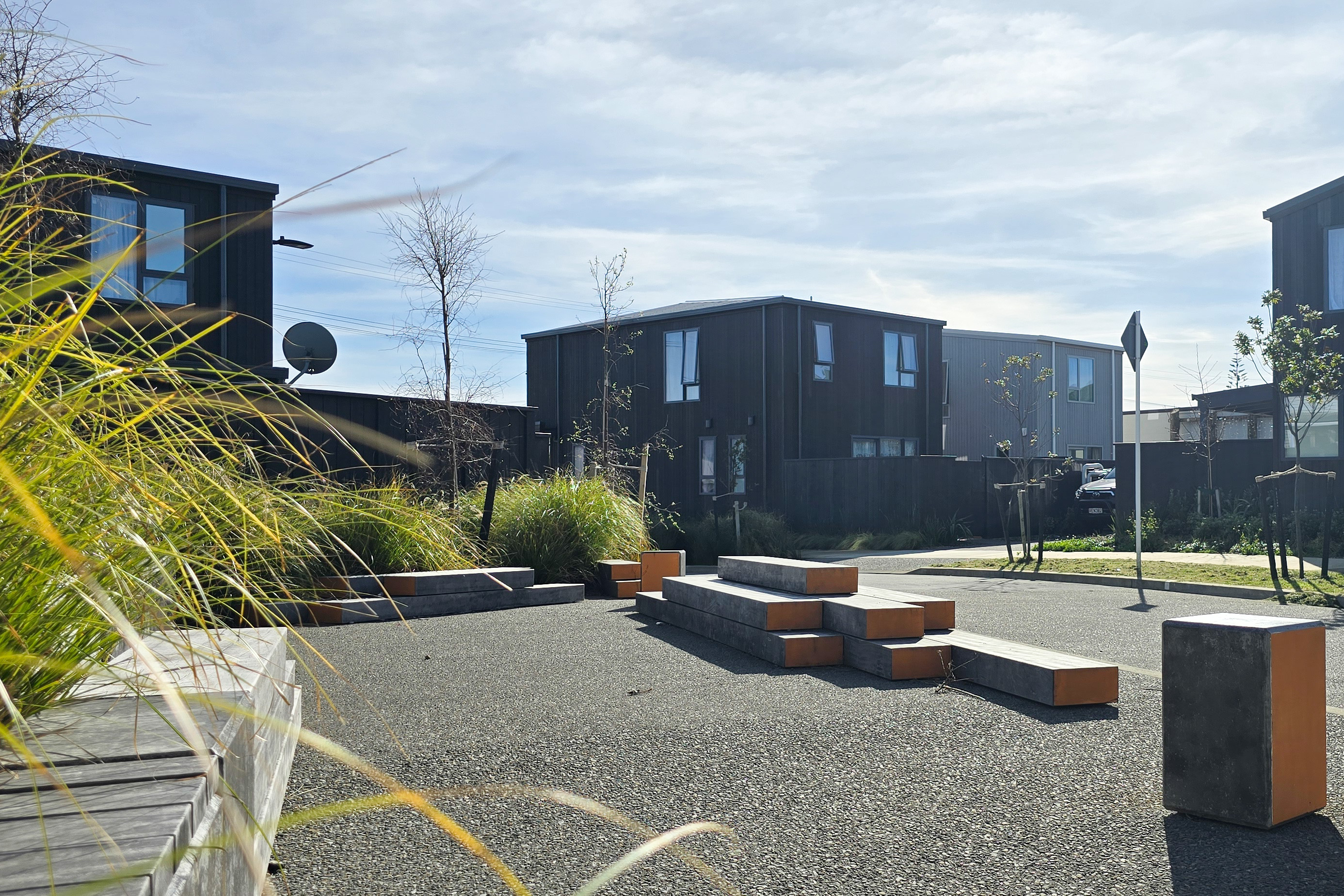

One of the largest urban regeneration projects in New Zealand. A brownfield site with decades of contamination history, aging infrastructure at capacity, and an entire community depending on the outcome. This is what Orogen signed up for when we joined the Te Aranga Alliance.
Eastern Porirua has long been one of the most underserved communities in the Wellington region. Aging state housing, stormwater networks well beyond their design life, a wastewater system that could not support growth, and waterways recording the lowest possible water quality grades. The vision behind Te Rā Nui, the Eastern Porirua Development, is straightforward: replace what is past its best, build the infrastructure to support a generation of new homes, and do it in a way that genuinely improves life for the people who live there.
Delivering that vision is anything but straightforward. That is where the Te Aranga Alliance comes in.
What the Alliance is, and how Orogen is part of it
Te Aranga Alliance is a partnership between civil and infrastructure experts Higgins, Goodmans, Beca, Harrison Grierson, and Orogen, working alongside Kāinga Ora, Porirua City Council, and Ngāti Toa Rangatira. The alliance model is designed specifically for programmes of this scale and complexity: rather than each organisation working independently toward its own scope, the Alliance operates as a single integrated team, sharing risk, resolving issues together, and moving faster than a conventional contract structure ever could.
What that means in practice is that Orogen people are embedded within the Alliance itself, not sitting outside it as a consultant. An Orogen senior leader has held a board-level role within the Alliance leadership. Orogen civil designers have led land development design packages across multiple neighbourhoods. Orogen surveyors have been on the ground throughout. An Orogen environmental manager has held responsibility for erosion and sediment control across the programme. And Orogen construction supervisors have been present on site through delivery, providing the hands-on technical oversight that keeps works compliant and on programme.
That depth of embedded involvement is what distinguishes Orogen's contribution from a conventional subconsultant engagement. This is not arms-length advice. It is shared ownership of the outcome.
Land development design and delivery
At the core of Orogen's role is leading the civil design across subdivision land development packages. That means taking sites from cleared and remediated ground through to fully serviced, build-ready land: roading, stormwater, wastewater, water supply, utilities, earthworks, and all the survey and compliance work that ties it together. On a programme of this complexity, with multiple neighbourhoods progressing simultaneously, Orogen civil designers and surveyors have held the technical thread across a rolling programme of design and delivery.
That coordination also extends to the wider design team, bringing together geotechnical engineers, structural engineers, landscape architects, transport engineers, and ecological specialists into a coherent process that keeps all disciplines aligned. On a project with this many moving parts, that integration is what keeps the work from fragmenting.
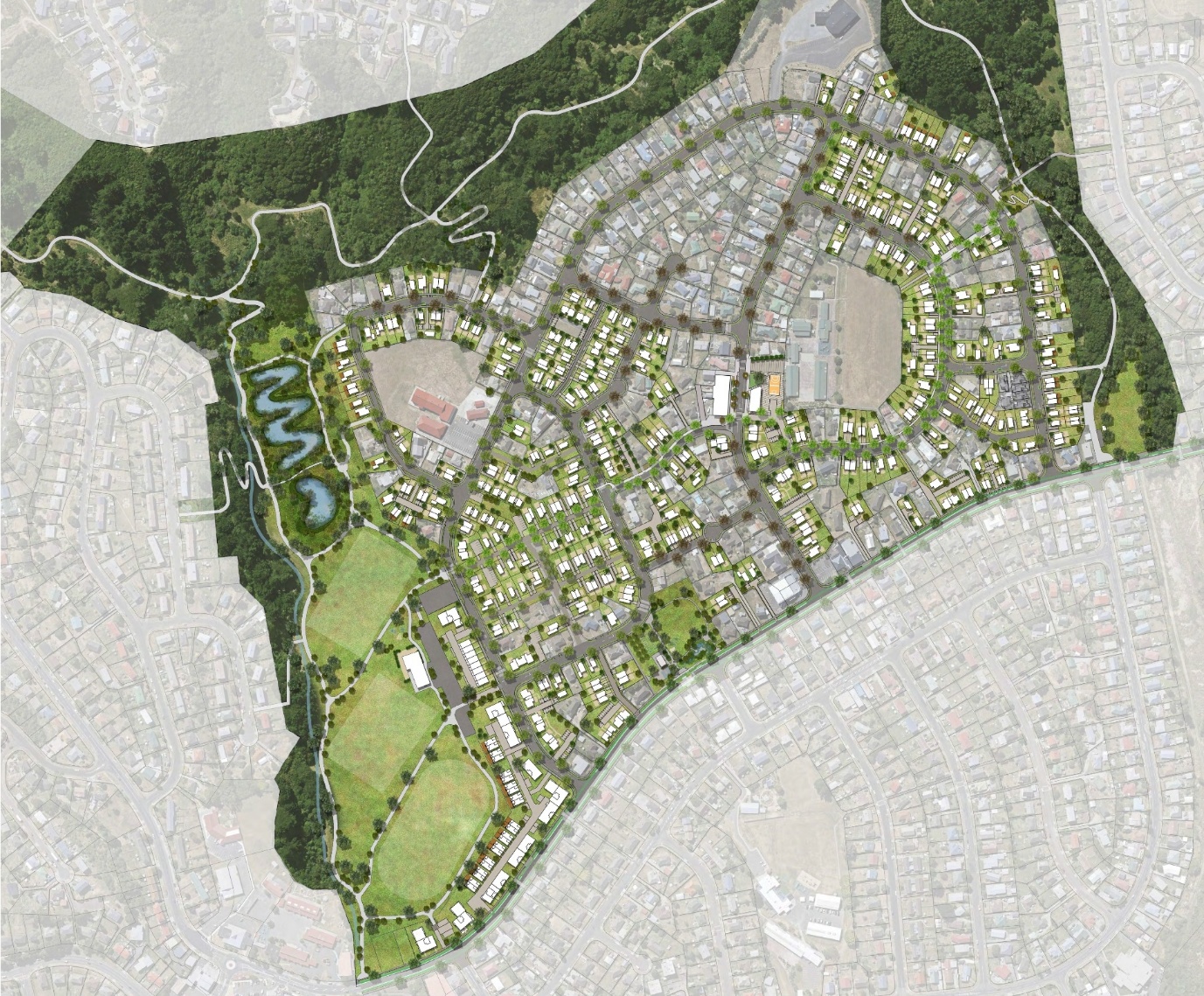
Bothamley Park trunk sewer: Design Lead through delivery
Before this project, manholes regularly overflowed raw sewage across the track and into Kenepuru Stream during rainfall. Stream bank erosion was undermining the sewer. Pipe bridge foundations were being washed out. The smell of sewage through the park was a constant. And the entire upstream development programme was bottlenecked behind a pipe that was both undersized and failing.
Orogen civil designers held the Design Lead role for the Bothamley Park trunk sewer upgrade through the delivery phase. The new sewer is 2.4km long and 900mm in diameter, replacing an aging network that crossed Kenepuru Stream twelve times. Through a combination of directional drilling (one kilometre bored through the hillside in five separate drives) and careful alignment, the new sewer crosses the stream just once. Twelve stream crossings have been removed entirely.
The project also had to pass under SH59, a four-lane highway, immediately adjacent to one of only three water mains supplying the Porirua CBD. The site ran through a steep, narrow valley with live stream crossings, significant contamination risk, and an active public park that needed to remain partially accessible throughout construction.
Concept and preliminary design, along with a COVID-19 Recovery fast-track consent application covering 14 specialist assessments, were completed in just over a year. Construction started in January 2023, less than two years from the beginning of concept design, and was substantially complete by January 2025. The park track was reopened ahead of the approved two-year closure schedule, and the project was delivered within the original budget including contingency. It supported over 100 full-time equivalent jobs from Porirua and the wider Wellington region during construction.
The social, cultural, and environmental outcomes of the project extend well beyond the technical scope, and stand as a model for how infrastructure delivery can genuinely serve a community.
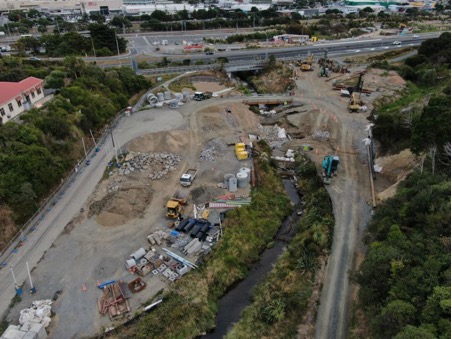
Environmental management: keeping construction clean
Eastern Porirua is a brownfield environment immediately adjacent to sensitive waterways, and that brings environmental responsibilities that greenfield subdivisions simply do not face. Contaminated soils, construction runoff, and the protection of Kenepuru Stream and Te Awarua-o-Porirua require environmental discipline built into every phase of the work.
Orogen's embedded environmental manager has held responsibility for erosion and sediment control across the programme, preparing and managing Construction Management Plans (CMPs) that govern how earthworks, site discharges, and sensitive areas are handled throughout construction. Land contamination assessment and remediation was undertaken by specialist contamination consultants, with findings fed through to the Orogen team to inform construction sequencing, CMP requirements, and compliance obligations.
The standard of environmental management on the Bothamley Park project set a benchmark for the whole Alliance. Rather than simply meeting consent requirements, the team set its own internal KPI for sediment pond performance, targeting sediment removal efficiency beyond what the consent demanded. The result: the Alliance achieved 14th percentile performance for best practice sediment removal, a result that earned Greater Wellington Regional Council's approval to continue earthworks throughout both winters of the construction period. That approval is granted only by exception and is a direct reflection of the team's environmental performance on the ground.
Kenepuru Stream was recorded at Grade E water quality before this programme began. Once the Bothamley Park sewer and the downstream Wellington Water storage tank are both complete, they will together prevent an average of 40,000 cubic metres of raw sewage from discharging into Te Awarua-o-Porirua each year. That is one of the most tangible environmental outcomes the development will deliver.
Concept design and consenting for the Cannons Creek Park wetland
Among the more significant and community-facing elements of the Te Rā Nui programme is the creation of a new wetland at the northern end of Cannons Creek Park. The wetland is designed to treat urban stormwater runoff, improve water quality entering Kenepuru Stream, reduce flood risk to nearby homes, and provide a lasting piece of community green infrastructure for eastern Porirua.
Orogen's team led the concept and preliminary design of the wetland from within the Alliance, taking the project from initial investigations through to a completed resource consent application and, ultimately, obtaining the consent that unlocked construction. That is a substantial piece of work: wetland design at this scale involves stormwater modelling, ecological assessment, engagement with Ngāti Toa Rangatira, Porirua City Council, and Wellington Water, and a consent application satisfying the requirements of multiple regulatory bodies. Specialist consultants have since taken the project through detailed design and into the ground, with around 20,000 native plants to be established and construction completing in late 2027.
The numbers behind the work
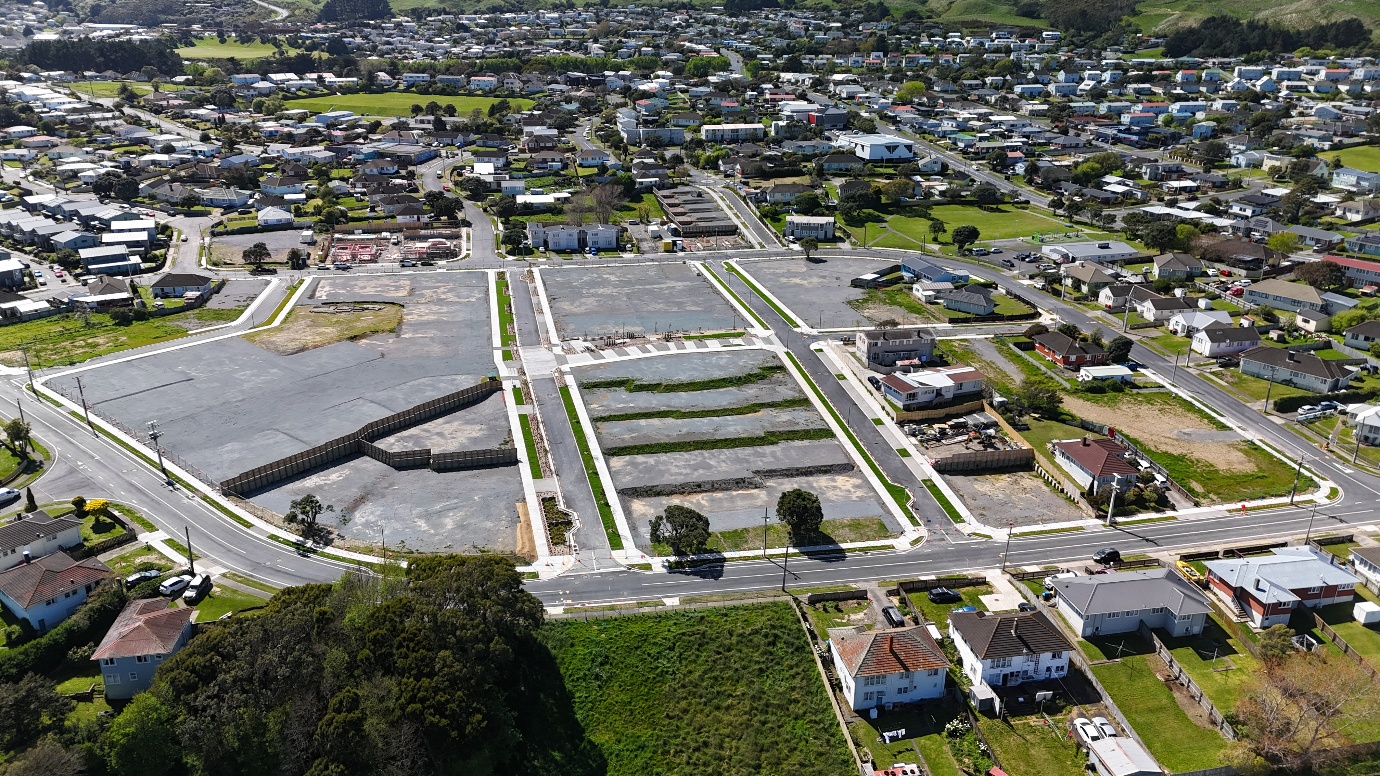
When Kāinga Ora marked the completion of civil and infrastructure works at the Esk site in late 2024, the scale of what the Alliance had delivered came into sharp focus. The 2.6-hectare Esk site is Wellington's largest single residential development site, and the numbers behind its delivery tell the story of what large-scale brownfield work actually involves: over 2,000 tonnes of contaminated material removed, 2,500 metres of new water supply pipes, 960 metres of new wastewater pipes, more than a kilometre of new stormwater pipes, 26,000 square metres of build-ready land, and 56 old homes cleared to make way for more than 100 new warm, dry homes. At the heart of the site, two rain gardens now clean and filter stormwater before it flows downstream.
A 1,500mm diameter pipe installed beneath the Esk site has also extended the wetland catchment by more than 35 hectares, significantly increasing the water quality benefit that the Cannons Creek Park wetland will deliver to Kenepuru Stream and Te Awarua-o-Porirua.
A project that matters
Te Rā Nui is one of those projects where the numbers only tell part of the story. It will enable over 2,000 new and upgraded homes across eastern Porirua. It represents one of the largest infrastructure investments in the Wellington region's history. And it is the largest residential development programme Wellington has ever seen.
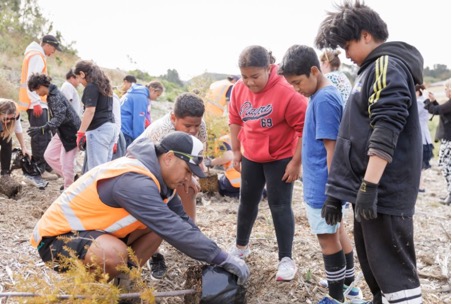
But some of the most important outcomes are harder to quantify. ParkRun no longer has to cancel its weekly event because it rained and sewage is across the track. The dense pine canopy that made the park feel unsafe has been cleared and replanted with 90,000 native plants, many of them selected with input from Ngāti Toa for their cultural and ecological value. A cadetship programme established through the partnership between Kāinga Ora, Ngāti Toa, and Porirua City Council has employed 19 cadets to grow and plant those trees, six of whom have since moved into full-time employment.
As one community member put it: "This means everything to us. This is our community and we love our community."
The Orogen people embedded within Te Aranga are proud of the work being done here, and proud of the community it is being done for.